
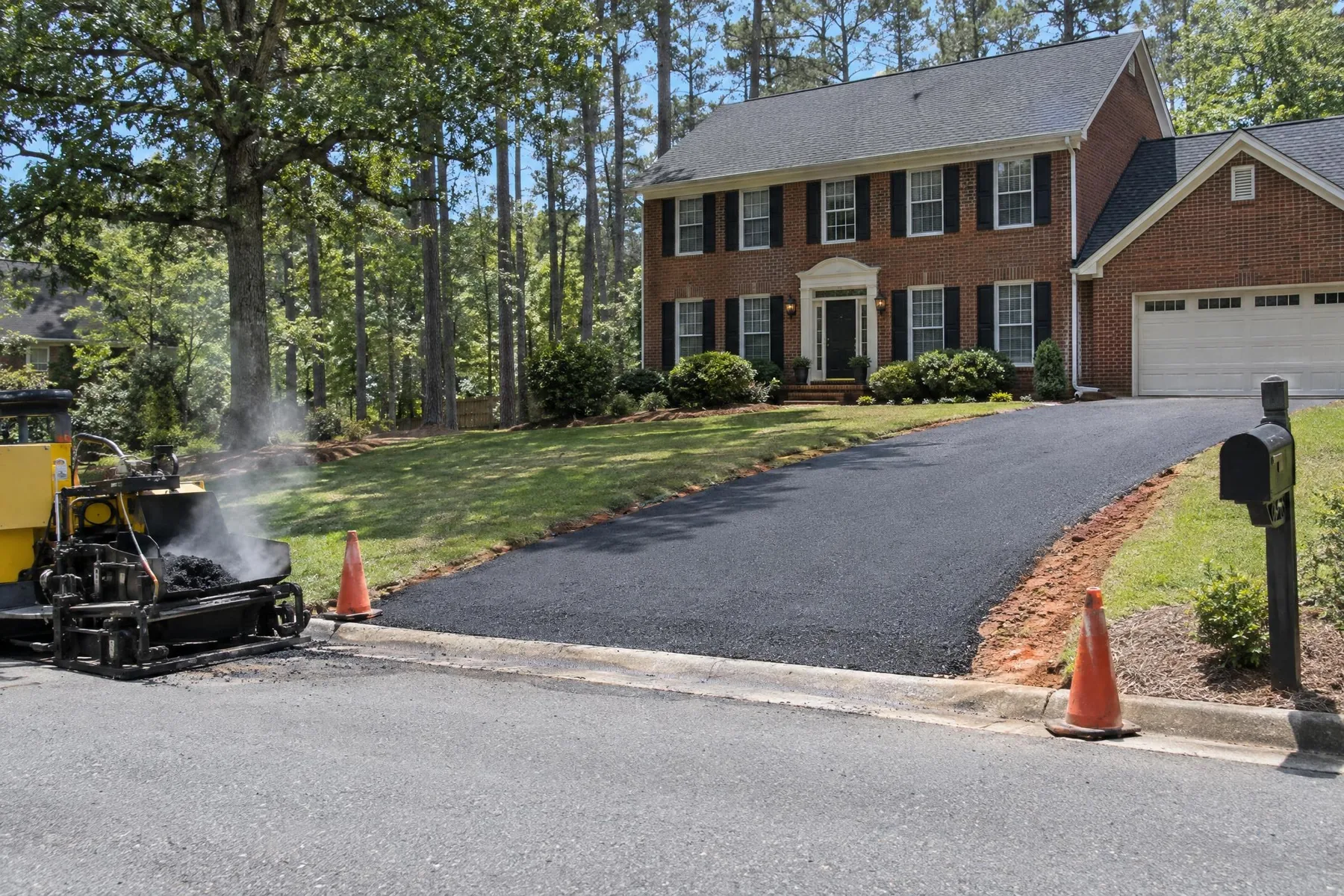
Freshly laid black asphalt driveway beside a brick colonial home with a small paving machine and cones at the curb

How Asphalt Paving Works in Sandy Springs, GA: Lifespan and When You Can Drive On New Asphalt

How Asphalt Paving Works on a Sandy Springs, GA Driveway or Parking Lot, Step by Step

Many owners have never watched a paving crew work, so Sandy Springs Asphalt Paving & Repair walks through it for Sandy Springs, GA and Fulton County. This page shows how asphalt paving works from the first visit to the final roll, plus how long a surface lasts and when it can take traffic. Stone goes in first, hot mix goes over it and a heavy roller packs it tight. Each stage below applies to driveways, lots and private roads.

Why homeowners choose us:

  • Free written estimates for every paving job
  • Compacted base under every new surface, not just a layer of asphalt on top
  • Warrantied work every job backed by a written warranty
  • Licensed and insured certificate on request

The crew behind this page has 20+ years of paving around metro Atlanta and 1,400+ driveways, lots and roads to its name. Every job follows the same order, and the estimate lists those steps before any digging begins. Both the free written estimate and the written warranty are on paper from day one. The sections below follow one job from the first call to the final roll.

Get a FREE Asphalt Paving Quote

How Asphalt Paving Works: Why Sandy Springs Pavement Cracks First

Asphalt is only the top layer. Under a typical home driveway sits an asphalt layer 3 to 5 inches thick on a stone bed 4 to 8 inches deep, and the stone does most of the carrying. Once water softens that bed, tires make the asphalt flex, then crack, then break. Poor drainage, a thin base and weak compaction do the most harm.

The ground in Sandy Springs makes this worse. Soil surveys list Cecil, Pacolet and Appling soils here, with subsoil that runs 30 to 47 percent clay, and wet clay has little strength. A base built too thin over it sags in the wheel paths, and cracks follow.

Weather adds the last piece. Atlanta collects about 50 inches of rain a year with no real dry season, and around 36 nights a year fall to freezing or lower. Water sits in every open crack, freezes and widens it, and the next thaw sends more in. Good paving is mostly base, drainage and compaction below the surface. A cheap bid that skips the base tends to cost more within a few winters, once the first potholes open. The asphalt is what you see, yet the work underneath decides if the pavement still rides smooth a decade from now. Ask any bidder what goes below the surface, how deep the stone will be and how it will be packed.

The Asphalt Paving Process in Five Steps on a Sandy Springs Driveway or Lot

The asphalt paving process follows one order on every job, and only the scale changes with the property.

1. Estimate and Base Check

Phone the office and pick a time for a visit. On site, the estimator tests the soft areas by foot and by probe, then looks for the low spots where rain collects. The free written estimate names the base work, the rolled thickness and the price, so the scope is clear before anything starts.

2. Removing the Old Surface and Preparing the Base

The crew breaks out and hauls away failed asphalt, then digs out any soft clay. New stone is spread and compacted in layers until the base feels firm and the grade drains. The life of the surface is decided right here, and wet clay is the usual reason this stage runs past the plan.

3. Laying the Hot Mix

A thin tack coat is sprayed at every joint between new and old asphalt, and hot mix asphalt goes down at the depth written on your estimate. A paver spreads the mix in an even sheet, then crew members hand-finish the seams and edges so water cannot creep under them. A storm stops the work, since hot mix cannot bond to a soaked layer underneath.

4. Rolling and Compaction

A roller packs the mix before it cools, and that packing builds density and strength into the surface. Meanwhile the crew keeps checking the slope as it goes, so puddles have nowhere to form. A well-rolled surface sheds Atlanta’s steady rain, but a poorly compacted one begins to ravel after only a few seasons of weather and traffic.

5. Cure and Handover

Cones fence off the new surface, and the crew confirms when it can carry traffic. The finished job is walked with you, questions about sealcoating get answered and your warranty goes into the file. Any section likely to need attention in later years is noted, which lets you plan for it ahead of time.

How Long Does Asphalt Last in Sandy Springs, and When to Drive on New Asphalt

Given a solid base, asphalt commonly delivers 15 to 30 years of use, and an overlay delivers fewer. Clay and winter freezes cut that short only when the base is weak, the drainage is poor or sealcoating gets skipped. Fresh pavement must also cure, and how long to wait depends on who uses it:

  • Foot traffic and pets need a full day away from the new surface.
  • Cars and light vehicles may roll onto the surface after roughly 48 to 72 hours, and some sources suggest three to five days.
  • Heavy trucks should stay off for roughly one to two weeks beyond the car wait.
  • Full cure takes around six months, and the surface keeps hardening through that period.
  • Sealcoating waits roughly half a year after installation and repeats every few years.

The first three bullets cover how long before you can drive on new asphalt in your own driveway. The last two cover how long does new asphalt take to cure and when to seal. Turning the steering wheel while the car sits still leaves marks in the first few days, so roll the car a little while turning. Cones go up on the day, and the crew explains which timings fit your job.

How Asphalt Paving Works on Resurfacing and Repair Jobs in Sandy Springs

Some jobs never touch bare ground. On a resurfacing, the old pavement stays put. The crew fills cracks, cleans the surface and sprays a tack coat before rolling down a fresh layer of roughly 1.5 to 2 inches. The work moves quickly and costs less, and it succeeds only on a sound base.

A repair is smaller again. The crew cuts out the failed spot in a square, rebuilds any soft stone and packs new asphalt in level with the pavement around it. Narrow cracks are cleaned and filled with hot rubberized sealant. Repairs made before the first freeze keep water out of the base and delay the bill for a bigger job. One visit settles which of the three fits best, and the estimate gives the reason in plain words. Owners who act in fall usually pay less than owners who wait until spring, since a winter of freezing nights has less time to work on the damage.

Each option has its own page, asphalt repair and driveway paving, and the cost page lists the price ranges.

How Asphalt Paving Works FAQs: Sandy Springs, GA

How does asphalt paving work?

Crews prepare and pack a stone base, spread hot mix at the planned depth and roll it before it cools. Service life depends on the base, the drainage and how well the mix was compacted.

How long does asphalt last in Sandy Springs, GA?

Expect 15 to 30 years of use from a surface with a solid base, and fewer from an overlay. Local clay and freezing nights do less harm when the base is firm and the sealcoating is kept up.

How long before you can drive on new asphalt?

Give it at least two to three days before parking a car on it, and longer before a loaded truck rolls over it. The crew names the day it is ready for traffic.

How long does new asphalt take to cure?

Full cure takes around half a year. Traffic is fine well before then, although the surface stays soft in heat and can mark under a standing tire.

How thick should an asphalt driveway be?

A typical home driveway has an asphalt layer 3 to 5 inches thick, sitting on a stone base of 4 to 8 inches. Ask any bidder if a quoted depth is measured before or after compaction.

When should new asphalt be sealcoated?

A first coat usually goes on around six months after installation, with more every few years after that. The crew can suggest timing for your surface.

Why does asphalt crack in Sandy Springs?

Water slips in through small cracks and softens the clay base, and freezing nights widen those cracks. The surface then flexes under tires and breaks apart, which is why a sealed crack costs far less than a pothole.

Sandy Springs Asphalt Paving & Repair serves Sandy Springs and Fulton County.

Get a Free Asphalt Paving Quote in Sandy Springs, GA

(678) 679-4147 Get a Free Quote